






Nootropic drinks and supplements both aim to support better focus, clearer thinking, and steadier energy.
At first glance, the difference seems simple. Drinks typically come in bottles or as shots, while supplements come in capsules or powdered forms.
But the real distinction isn’t just how you take them. It’s how they’re formulated, the standards they follow, and how transparent they are about what’s inside.
Let's unpack how these formats differ and what it means for you as an end user.
Further Reading:
-
Struggling to concentrate? Learn How to Spot Brain Fog and clear the mental haze.
-
Find out how L-Theanine Works as a Nootropic for calm, focused energy.
-
Want a sharper mind? Explore 5 Practical Ways to Improve Your Mental Acuity.
Jump To
- Nootropic Drink vs Supplement: Quick Comparison
- Nootropic Drink vs Supplement: Key Differences Across 5 Factors
- What the Different Rules for Nootropic Drinks and Supplements Mean for You
- Sol-ti MINDBOOST+ SuperShot®: Nootropic Drink You Can Trust
Nootropic Drink vs Supplement: Quick Comparison
Here’s a glance at how nootropic drinks stack up against supplements:
| Nootropic Drinks | Nootropic Supplement | |
| Regulatory Classification | Regulated as conventional foods under the FDA food laws | Regulated under DSHEA (1994) as dietary supplements |
| Ingredient Standards | Must use FDA-approved food additives or GRAS (Generally Recognized as Safe) ingredients for food use | Not required to meet FDA-approved or GRAS food standards |
| Labeling Format | Uses Nutrition Facts panel | Uses Supplement Facts panel |
| Dose Transparency | No proprietary blends; amounts of each ingredient are disclosed clearly | Proprietary blends allowed; individual doses may not be disclosed |
| Pre-Market Approval | Ingredients expected to meet safety standards before use in food | No FDA approval required before the product is sold |
| Certifications | Can layer USDA Organic on top of food safety rules | Can pursue organic certification, but the baseline framework differs |
Nootropic Drink vs Supplement: Key Differences Across 5 Factors
Most people compare nootropic drinks and supplements by format — what they look like, how you take them, and how convenient they are.
That's a reasonable starting point.
But the most important difference sits behind the label.
It’s regulatory. And that shapes how products are made, reviewed, and presented to you.
Here’s how the distinction shows up:
1. Regulatory Classification: Food Product vs. Dietary Supplement
A nootropic drink is regulated as a conventional food under the Federal Food, Drug, and Cosmetic Act — the same legal framework that governs every beverage on a grocery store shelf.
These rules for food safety, ingredient use, and labeling have been in place since the 1950s. They ensure that anything you consume as a “food” meets established safety benchmarks.
Nootropic supplements operate under a different law: the Dietary Supplement Health and Education Act of 1994 (DSHEA).
The FDA still oversees them, just with different rules for ingredient approval and labeling (which we’ll cover below).
2. Ingredient Approval Standards
Ingredients in nootropic drinks must be permitted for use in food. They are either FDA-approved food additives or recognized as GRAS (Generally Recognized as Safe) for food use.
GRAS status means qualified experts agree the ingredient is safe under its intended use in food, based on available scientific evidence.
In contrast, an ingredient in a nootropic supplement does not need to be recognized as safe for use in food.
If a supplement uses a "new dietary ingredient," the company must notify the FDA before selling it. That notification tells the FDA the company believes the ingredient is safe. It does not involve the formal pre-approval review that the FDA uses for food additives.
3. Labeling Transparency
Nootropic drinks use a Nutrition Facts panel.
Every ingredient is listed by weight in a standardized format (the same one you'd see on any food product). What's on the label is what's in the bottle, with no room for ambiguity.
Nootropic supplements use a Supplement Facts panel. They can list exact amounts, but they can also use proprietary blends.
On the label, the proprietary blend is listed by total weight, but not necessarily how much of each ingredient is in it. You know what's in the formula. You don't always know how much.
4. Pre-Market Oversight
As explained above, ingredients in nootropic drinks are expected to meet food safety standards before they’re used in a beverage.
Nootropic supplements do not require FDA approval before going to market. Companies are responsible for ensuring safety, and regulators typically step in if issues arise later.
The difference is timing.
One system verifies safety before products hit shelves. The other relies on companies to self-regulate, with the FDA stepping in only if problems surface later.
5. Other Certifications and Quality Signals
Both nootropic drinks and nootropic supplements can pursue certifications like USDA Organic if they meet the required standards.
These standards focus on how ingredients are grown, handled, and processed. To use the seal, a company must work with a USDA-approved third-party certifier and pass regular inspections.
The difference lies in one added layer for beverages. When a nootropic drink carries USDA Organic on top of food-grade ingredient standards, that's two independent layers of oversight working in your favor.
On paper, these rules may sound technical.
But they shape what ends up in your hand and in your body.
What the Different Rules for Nootropic Drinks and Supplements Mean for You
Here’s what a choice between a nootropic beverage and a supplement can mean in practical terms:
- More checks before sale: Nootropic beverages are built around ingredients that meet food safety standards before the product ever reaches shelves — fewer unknowns from the start.
- Stricter ingredient expectations: Food-format drinks use ingredients cleared for regular consumption. That makes the formula more familiar, more predictable, and easier to assess.
- Clearer labels: Nutrition facts on a nootropic beverage follow a standardized format. You can quickly see what’s inside and compare products without guessing what a label really means.
- No hidden dose blends: Drinks can’t group ingredients under proprietary blends that hide individual amounts. You know how much of each ingredient you’re getting, down to the milligram.
- Extra verification when certified: A nootropic drink carrying USDA Organic certification has passed independent inspections on top of its existing food safety classification. For many people, that added oversight simply builds more trust.
The bottom line: If you value ingredient safety and transparency, a nootropic beverage likely makes more sense than a supplement.
But which cognitive beverage is actually worth your attention?
Meet Sol-ti’s MINDBOOST+™ SuperShot®.
MINDBOOST+™ SuperShot®: Organic Nootropic Drink You Can Trust

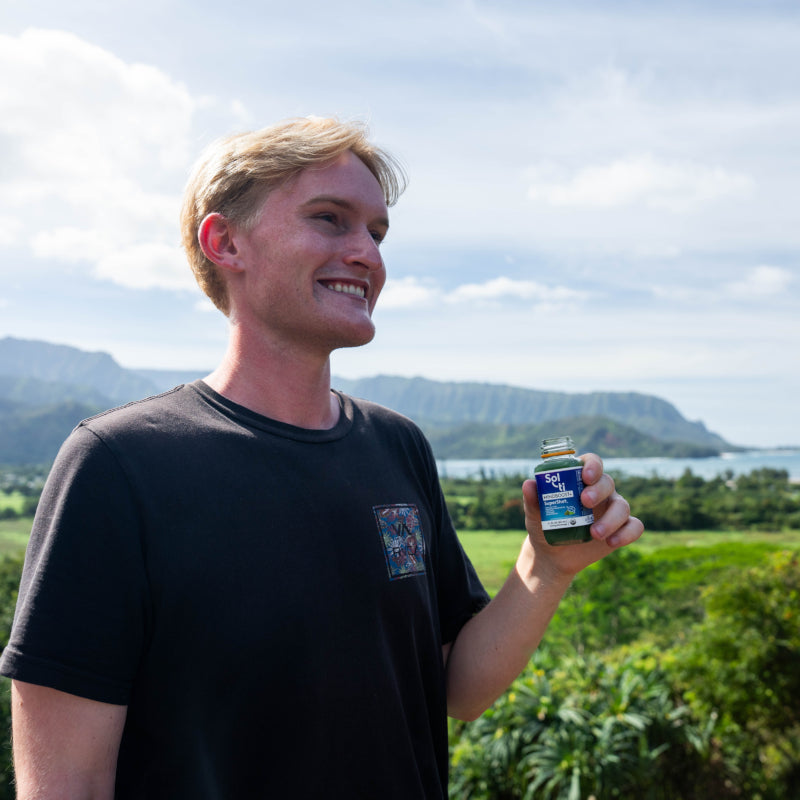
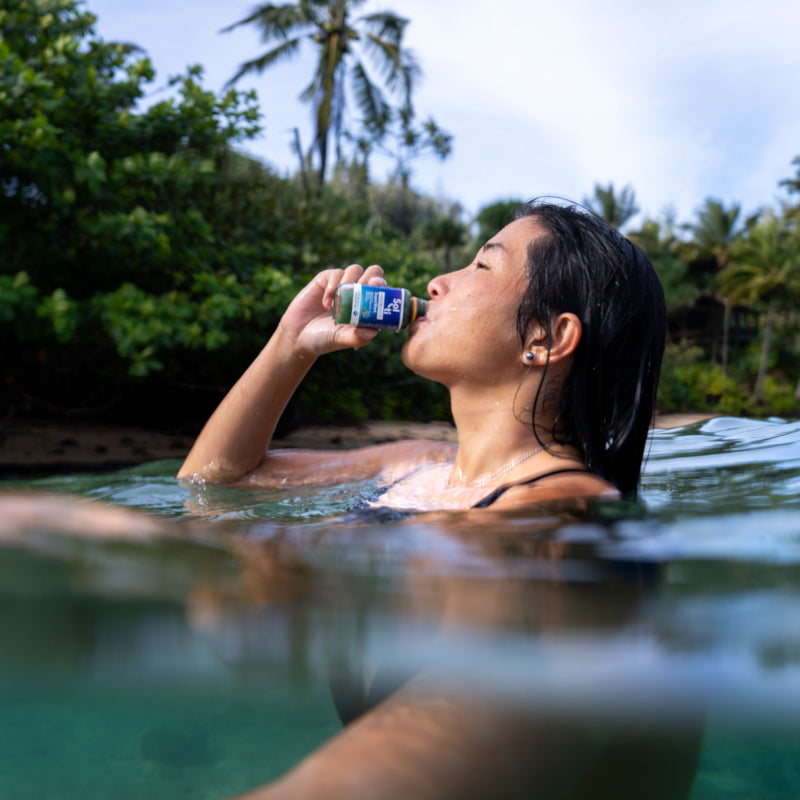
The MINDBOOST+™ SuperShot® is a ready-to-drink, functional nootropic beverage designed to support calm focus and cognitive performance in one convenient shot.
It’s regulated under FDA food laws, carries a clear Nutrition Facts panel, and follows strict food safety standards. It also uses USDA Organic real-food ingredients you can recognize and trust.
What’s Inside the MINDBOOST+™ SuperShot®
Our formula combines nootropic ingredients, adaptogens, and plant-based nutrients to support overall mental wellness:
- L-theanine (from ceremonial-grade matcha and green tea extract): Promotes calm, focused attention and works in synergy with caffeine to smooth out overstimulation.
- Natural caffeine (from green coffee beans/berry): Supports alertness, reaction speed, and mental energy without jitters.
- Lion’s Mane mushroom: Linked to mental clarity, focus, and memory during cognitively demanding tasks.
- KSM-66® Ashwagandha: A clinically studied adaptogen that helps your body manage stress and maintain steady mental clarity.
- Holy basil: An adaptogenic herb that keeps you calm and focused as daily demands stack up.
- Maca root: Helps sustain energy and cognitive stamina without a spike-and-crash pattern.
- Aquamin® & Baja Gold Unrefined Mineral Sea Salt: Replenishes trace minerals and electrolytes that support hydration.
- Maple syrup: Offers mild natural sweetness with trace minerals for steady energy support.
- Cold-pressed organic apple, lemon, and ginger juice: Adds vitamin C and other nutrients that support overall cognitive vitality.
Each bottle is treated with Sol-ti’s proprietary UV Light Filtration, which avoids heat and high-pressure processing. This helps protect delicate, heat-sensitive nutrients that can break down during conventional production.
It’s packaged in glass rather than plastic. Glass shields sensitive ingredients like L-theanine from light exposure and removes the risk of microplastic contact.
Ready to experience the difference?
Try the MINDBOOST+™ SuperShot® today for focus that holds up when your day doesn't slow down.
Prioritize Safety and Clarity with Sol-ti’s Nootropic Drink
Most nootropic products promise similar benefits.
What sets them apart is how they’re made, the ingredient standards, and how clearly they show you what’s inside.
Sol-ti’s MINDBOOST+™ SuperShot® is built on that foundation. It’s made under FDA food laws, with a transparent Nutrition Facts panel and USDA Organic ingredients to help you unlock mental clarity in one shot.
Find it at stores near you or order online today — with free shipping on orders over $75.
Stay vibrant,

Want to hear more from the Sol-ti® community? Sign up for our weekly Newsletter!